Yacht Crew Salaries 2026: Complete Position-by-Position Guide
Quick Answer: Yacht Crew Salary Ranges
Yacht crew salaries for 2026 range from $36,000-$250,000+ annually depending on position and experience. Captain: $80K-$180K+, First Officer/Engineer: $60K-$120K, Chef: $60K-$96K, Stewardess: $36K-$72K, Deckhand: $36K-$60K. Benefits add 20-30% to base compensation.
Table of Contents
2026 Yacht Crew Salary Overview
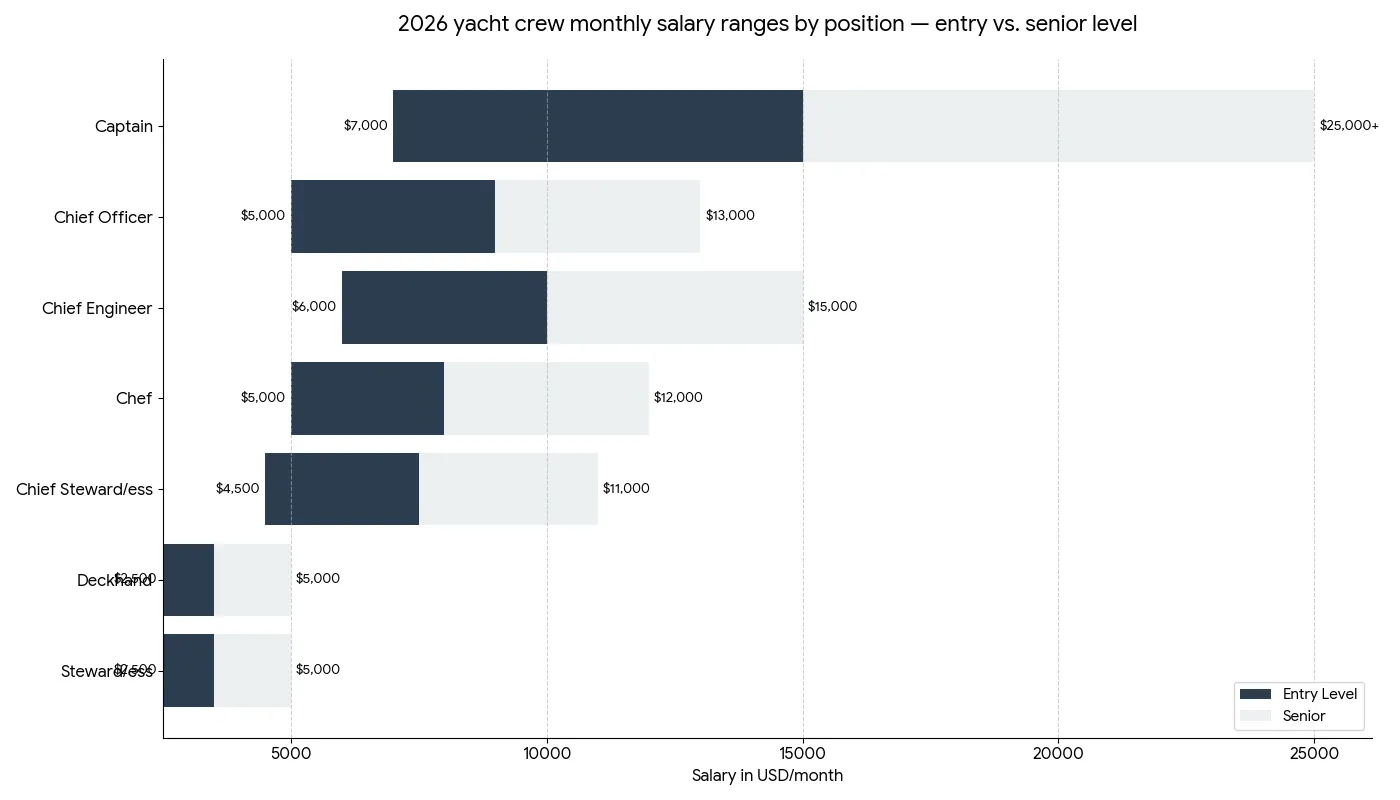
Monthly salary ranges for all major crew positions — entry level vs. senior (2026 market data).
Crew salaries represent the single largest operating expense for most yacht owners, typically accounting for 30-40% of total annual costs. Understanding current market rates is essential for budgeting and attracting qualified professionals who will protect your investment and ensure safe operations.
The yacht crew employment market in 2026 remains competitive, with experienced professionals commanding premium compensation. Post-pandemic demand for qualified crew continues to exceed supply, particularly for specialized positions like chief engineers and professional chefs.
💡 Market Context 2026
Salaries have increased 8-12% since 2023 due to crew shortages and inflation. Expect to pay at the higher end of ranges to attract and retain experienced professionals. The 10% rule of yacht ownership accounts for these crew costs as part of total annual operating expenses.
Captain Salaries by Vessel Size
The captain commands the highest salary as they hold ultimate responsibility for vessel operations, crew management, and passenger safety. Compensation correlates directly with yacht length, complexity, and navigation requirements.
| Yacht Size | Entry Level | Experienced | Master Mariner |
|---|---|---|---|
| 60-80 feet | $80,000-$90,000 | $90,000-$110,000 | $110,000-$130,000 |
| 80-100 feet | $90,000-$110,000 | $110,000-$140,000 | $140,000-$170,000 |
| 100-130 feet | $110,000-$130,000 | $130,000-$160,000 | $160,000-$200,000 |
| 130-160 feet | $130,000-$160,000 | $160,000-$190,000 | $190,000-$230,000 |
| 160+ feet | $160,000-$200,000 | $200,000-$250,000 | $250,000-$300,000+ |
What Determines Captain Salary?
- Certifications: USCG Master 100 tons vs 200 tons vs Unlimited
- Experience: Years at sea and as captain
- Navigation range: Coastal vs worldwide
- Yacht complexity: Modern systems, stabilizers, dynamic positioning
- Charter operations: Charter captains earn 10-20% more
- Language skills: Multilingual captains command premium
All Crew Positions & 2026 Pay Ranges
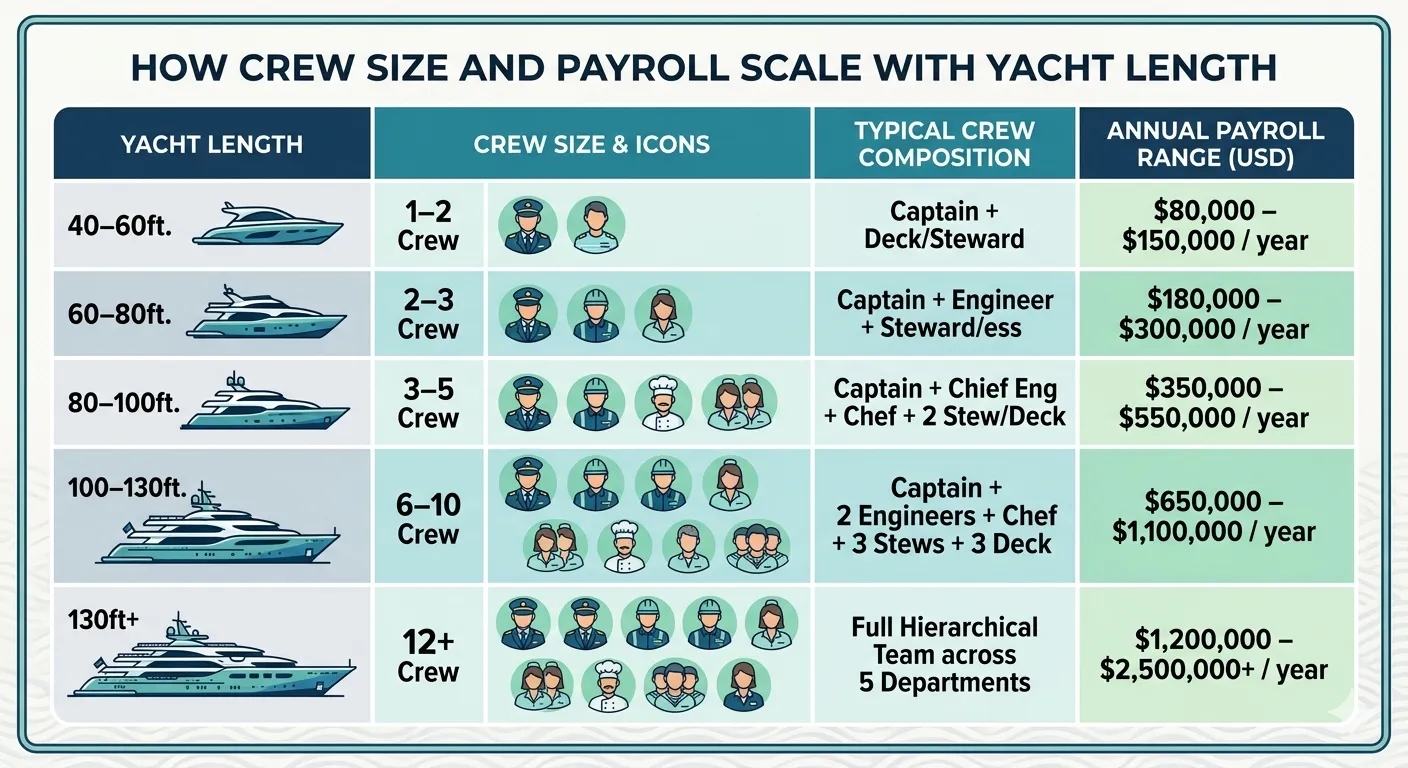
Crew size and annual payroll by yacht length — from a 40ft with 1 crew to a 130ft+ superyacht requiring 12+ across 5 departments.
Deck Department
| Position | Annual Salary Range | Typical Yacht Size |
|---|---|---|
| Captain | $80,000-$250,000+ | All sizes |
| First Officer / Mate | $54,000-$90,000 | 80ft+ |
| Bosun | $48,000-$72,000 | 100ft+ |
| Deckhand | $36,000-$54,000 | 60ft+ |
| Lead Deckhand | $42,000-$60,000 | 80ft+ |
Engineering Department
| Position | Annual Salary Range | Notes |
|---|---|---|
| Chief Engineer | $72,000-$150,000 | High demand, specialized skills |
| Second Engineer | $60,000-$96,000 | 130ft+ yachts |
| ETO (Electronics) | $66,000-$108,000 | Complex systems specialist |
Interior Department
For a deep dive on chef salaries specifically — including Below Deck context, tip breakdowns, and specialization premiums — see our complete yacht chef salary guide for 2026.
| Position | Annual Salary Range | Experience Impact |
|---|---|---|
| Chef | $60,000-$120,000 | Culinary training significantly impacts pay |
| Chief Stewardess | $48,000-$78,000 | Hospitality management experience valued |
| Stewardess / Stew | $36,000-$60,000 | Entry position, growth potential |
| Purser | $54,000-$84,000 | Administrative, large yachts 130ft+ |
📊 Example: 100ft Motor Yacht Crew Budget
Typical crew complement for a 100-foot yacht:
- Captain (experienced): $130,000
- First Officer / Engineer: $72,000
- Chef: $72,000
- Chief Stewardess: $54,000
- Deckhand: $42,000
Total Base Salaries: $370,000/year
Add Benefits (25%): +$92,500
Total Crew Cost: $462,500/year
Experience Level Impact on Compensation
Experience dramatically affects earning potential across all positions. The industry recognizes three general experience tiers:
Entry Level (0-2 years yachting)
- Required certifications but limited sea time
- Still learning vessel-specific systems and protocols
- Salary: Bottom 20% of position range
- Example: Entry deckhand $36,000-$42,000
Experienced (3-7 years)
- Proven track record on similar vessels
- Strong references from previous owners/captains
- Salary: Middle 60% of position range
- Example: Experienced deckhand $42,000-$50,000
Senior / Specialist (8+ years)
- Deep expertise in position and vessel type
- Advanced certifications and specialized skills
- Leadership capabilities for larger crews
- Salary: Top 20% of position range
- Example: Senior deckhand / Lead $50,000-$54,000
⚠️ The Cost of Inexperienced Crew
Hiring at the bottom of salary ranges to save money often backfires. Inexperienced crew require more supervision, make costly mistakes, and have higher turnover rates. The expense of recruiting and training replacements typically exceeds the initial savings. Budget for mid-range experienced crew as your baseline.
Regional Salary Variations
Geographic location significantly impacts crew compensation due to cost of living differences and local labor markets.
USA / Caribbean (Baseline = 100%)
- Standard market rates as shown in tables above
- Competitive market with good crew availability
- English-speaking advantage
Mediterranean (Europe)
- Salaries: 90-110% of USA rates
- Highly competitive crew market
- Multi-lingual crew command premium (+10-15%)
- Strong EU employment regulations
- Higher cost of living for crew shore time
Pacific / Asia
- Salaries: 80-95% of USA rates
- Growing yachting market
- Crew availability improving but still limited
- Language barriers can be challenging
Australia / New Zealand
- Salaries: 105-120% of USA rates
- High cost of living drives higher compensation
- Strong labor protections and crew rights
- Smaller crew pool, premium for experienced professionals
Benefits & Total Compensation Package
Base salary represents only 70-80% of total crew compensation. A comprehensive benefits package typically adds 20-30% to employment costs:
Standard Benefits (Included in Most Positions)
- Health Insurance: 70-100% employer-paid coverage
- Accommodation & Meals: Provided while onboard
- Uniforms: 3-5 sets provided and replaced annually
- Laundry: Uniform cleaning included
- Travel to/from yacht: Flights for rotation or joining
Premium Benefits (Common on 100ft+ Yachts)
- Paid vacation: 4-6 weeks annually
- Training budget: $2,000-5,000/year for certifications
- Crew rotation: On/off schedules (e.g., 2 months on, 1 month off)
- Retirement contributions: 3-5% of salary
- Performance bonuses: 5-10% annual for exceptional service
- Gym membership: For shore time wellness
💰 Total Compensation Example
Position: Chief Stewardess, experienced
- Base Salary: $60,000
- Health Insurance: $8,400
- Paid Vacation (5 weeks): $5,769
- Training & Certifications: $2,000
- Uniforms & Supplies: $1,200
- Travel Expenses: $2,500
Total Annual Cost to Owner: $79,869
Actual compensation increase: 33% above base salary
Crew Requirements by Yacht Size
The number of crew members required correlates with yacht length and complexity. Here are industry standard crew complements:
| Yacht Length | Min Crew | Typical Crew | Full Service |
|---|---|---|---|
| 60-70 feet | 0-1 | 1-2 | 2-3 |
| 70-90 feet | 2 | 3-4 | 4-5 |
| 90-110 feet | 3 | 4-5 | 6-7 |
| 110-130 feet | 4 | 6-8 | 8-10 |
| 130-160 feet | 6 | 9-12 | 12-15 |
| 160-200 feet | 10 | 15-20 | 20-25 |
💡 Crew Size Philosophy
Minimum crew covers basic operations and safety but limits cruising range and guest service. Typical crew provides comfortable operations with reasonable work/life balance. Full service enables extensive entertaining, worldwide cruising, and charter operations. Most privately-operated yachts aim for "typical crew" complement.
Budgeting for Annual Crew Costs
When planning your yacht crew budget, use these guidelines:
Quick Budget Formula
Annual Crew Budget = (Yacht Length in Feet × $6,000) to (Yacht Length × $8,000)
📊 Budget Examples by Yacht Size
80-foot yacht:
- Formula range: $480,000-$640,000
- Typical crew (3-4): $420,000-$550,000 ✓
120-foot yacht:
- Formula range: $720,000-$960,000
- Typical crew (6-8): $750,000-$900,000 ✓
Monthly Cash Flow Planning
- Divide annual budget by 12 for monthly crew expenses
- Budget an additional 10% contingency for recruitment and turnover
- Plan for salary increases: 3-5% annually to retain crew
- Account for benefits inflation: 4-6% annual increases
💰 Calculate Your Complete Yacht Costs
Crew salaries are just one component. Our calculator provides a comprehensive breakdown including dockage, maintenance, insurance, and more.
Use Free Calculator →Finding & Retaining Quality Crew
Crew Recruitment Channels
- Crew agencies: Specialized placement firms (15-20% of annual salary fee)
- Online platforms: CrewFinders, YachtCrewList, Dockwalk
- Boat shows: Fort Lauderdale, Monaco, Palm Beach crew hiring events
- Word of mouth: Referrals from other captains and owners
- Professional networks: Captain associations, industry groups
Red Flags During Hiring
- Gaps in employment history without explanation
- Reluctance to provide previous captain references
- Incomplete or expired certifications
- Frequent job changes (annual or more often)
- Unrealistic salary expectations for experience level
- Poor communication skills or professionalism
Retention Best Practices
- Competitive compensation: Pay at or above market rates
- Clear expectations: Written job descriptions and performance reviews
- Professional development: Fund training and certifications
- Work-life balance: Reasonable schedules and adequate time off
- Quality equipment: Proper tools and safety gear
- Respectful culture: Treat crew professionally, not as servants
✅ Industry Best Practice
The most successful yacht operations view crew as skilled professionals protecting a multi-million dollar asset rather than as a cost to minimize. Quality crew prevent costly mistakes, extend vessel life through proper maintenance, ensure safety, and create exceptional experiences. Investing in top-tier crew pays dividends through better operational outcomes and higher resale value.
Frequently Asked Questions
Do yacht crew pay taxes?
Yes. Crew taxation depends on flag state, employment structure, and individual circumstances. USA-flagged yachts typically withhold standard payroll taxes. Foreign-flagged vessels may have different requirements. Most crew work with specialized marine accountants to ensure compliance. As an owner, consult with maritime employment counsel to structure crew compensation properly.
What certifications do crew need?
Captain: USCG Master license (tonnage appropriate to vessel), STCW Basic Safety Training. Engineers: Specific certifications for yacht systems. All crew: STCW Basic Safety, often CPR/First Aid, may require security training for international waters.
Can I hire crew through an LLC to reduce costs?
While various employment structures exist, trying to classify crew as independent contractors rather than employees usually fails IRS scrutiny. Most yachts employ crew directly or through professional employment organizations (PEOs) that handle payroll and compliance. Maritime employment law is complex—consult qualified counsel rather than attempting shortcuts that create legal liability.
How often does crew turnover occur?
Industry average is 18-24 months per position, though well-run yachts with competitive compensation retain crew 3-5+ years. Captain and chief engineer positions tend toward longer tenure (3-7 years) while junior positions see more movement as crew advance their careers.
Should I hire permanent crew or rotational crew?
Permanent crew (no rotation) works well for smaller yachts (under 100ft) and owners who cruise seasonally. Rotational crew provides better work-life balance, reduces burnout, and is industry standard for yachts 130ft+. Rotation typically means 2-3 months on, 1-2 months off, requiring dual-staffing for key positions (increases costs 40-60% but improves retention and performance).
What's the difference between day workers and permanent crew?
Day workers are hired hourly/daily for specific tasks (detailing, mechanical work, provisioning). Typical rate: $25-50/hour. Permanent crew are salaried employees providing ongoing operations. Most yachts use day workers to supplement permanent crew during maintenance periods or peak seasons, but permanent crew are essential for safe operations and vessel security.
How do charter operations affect crew compensation?
Charter yachts typically pay crew base salaries 10-15% higher than private yachts due to increased workload and service expectations. Additionally, crew earn tips from charter guests, typically 15-20% of charter fee, distributed among crew. A $50,000 weekly charter generates $7,500-10,000 in crew tips. However, charter work is demanding—longer hours, constant guest service, and less personal time.